
Frontier Research Advances — Science | A New Breakthrough in Enzyme Engineering: Professor Lei Xiaoguang’s team at Peking University “Engineers Aldehyde Dehydrogenases to Achieve Highly Efficient Amide Bond Formation”
Classification: Industry News
Publication:2026-03-12 14:52
Background
Amide bond formation is a widely employed chemical reaction in the pharmaceutical industry, as amide moieties are ubiquitous in drug molecules, including apixaban, rivaroxaban, enzalutamide, olaparib, vadarostat, regorafenib, vorinostat, imatinib, and others (see Figure 1). Traditional synthetic approaches rely on highly activated carbonyl compounds—such as carboxylic acids, esters, or nitriles—and typically require stoichiometric coupling reagents, harsh reaction conditions, and extensive waste‑management procedures. Enzymatic strategies largely follow a similar rationale, encompassing nitrile hydration, ester aminolysis catalyzed by lipases or N‑acyltransferases, and acid‑mediated amidation, either performed alone or in conjunction with N‑acyltransferase‑catalyzed reactions. Given the ready availability of carboxylic acids, acid‑based methodologies have recently garnered significant attention.
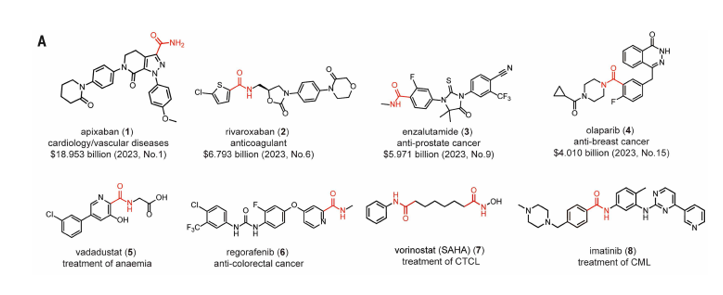
Figure 1. Amide bonds in pharmaceutical molecular structures
In recent years, researchers have begun to develop chemical routes for synthesizing amides from low‑reactivity precursors, such as aldehydes or alcohols (Figure 2), thereby broadening the range of available starting materials. In particular, oxidative amidation offers a step‑ and atom‑economical approach with broad substrate scope. However, the use of expensive or toxic transition‑metal catalysts, such as ruthenium complexes or copper catalysts, has limited its synthetic applications. By contrast, biocatalytic formation of amide bonds from low‑reactivity precursors remains largely unexplored. Consequently, the development of a biocatalytic method that directly converts aldehydes or alcohols into amides would expand the biocatalytic toolbox and provide significant advantages for the sustainable synthesis of complex bioactive molecules.
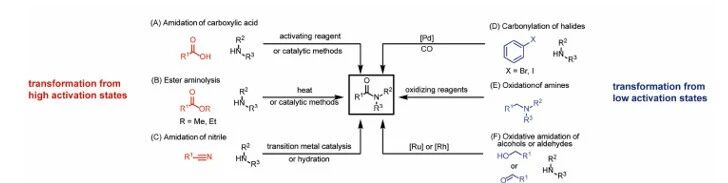
Figure 2. Chemical synthesis of amide bonds
Aldehyde dehydrogenase (ALDH) is a superfamily of nicotinamide adenine dinucleotide phosphate‑dependent (NADP⁺‑dependent) enzymes that oxidize a wide range of aliphatic and aromatic aldehydes to their corresponding acids. Mechanistically, ALDH‑catalyzed transformations proceed via a reaction cascade involving the formation of a hemithioacetal, the generation of an NADP⁺‑dependent thioester, and its subsequent hydrolysis. Given the high reactivity of the thioester intermediate, the authors engineered ALDH by substituting water with an amine in the final step, enabling nucleophilic attack on the thioester and thereby blocking hydrolysis and facilitating the conversion of aldehydes into amides. In this study, the authors report theory‑driven protein engineering of ALDHs to generate oxidative amidases (OxiAms) (Figure 3).
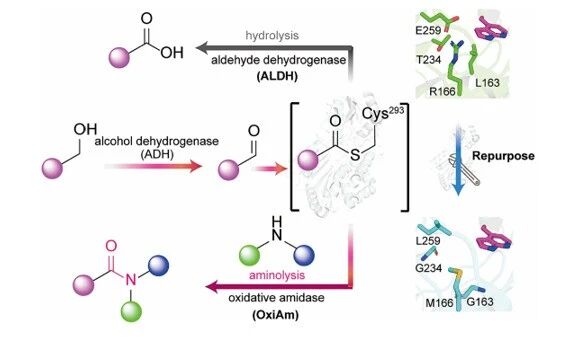
Figure 3. From aldehyde dehydrogenase to oxidative aminotransferase pathway
By screening aldehyde dehydrogenases from diverse sources, the authors identified that the p‑hydroxybenzaldehyde dehydrogenase (PHBDD) from Pseudomonas putida exhibits activity toward amide synthesis. Focusing on this enzyme and employing amino acid sequence analysis, they introduced saturation mutations at conserved residues, ultimately identifying several mutants (M1, M2, M3) capable of catalyzing reactions with different substrates.
Catalytic Mechanism and Performance Advantages
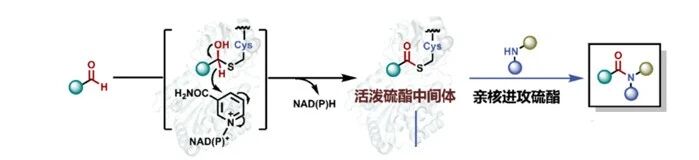
Figure 4. Catalytic mechanism of the enzyme
When the substrate aldehyde and the cofactor NADP+ enter the enzyme’s active site, the thiol group of the cysteine residue in the catalytic center performs a nucleophilic attack on the carbonyl carbon of the aldehyde, cleaving the C=O double bond and generating an electron-rich hydroxyl group. This hydroxyl group transfers electrons to the oxidized form of the cofactor NADP+, thereby reducing it and ultimately yielding a highly reactive thioester intermediate. Upon the entry of a new amino compound into the active site, its amine group undergoes a nucleophilic attack on the thioester, causing the cysteine thiol to be displaced and, finally, the amine to become covalently linked, forming an amide‑bonded product (see Figure 4).
The authors collectively named the mutants obtained during the engineering process—M1, M2, and M3, which possess oxidative amidation activity—as OxiAms. They systematically evaluated these OxiAms using diverse sets of heteroaryl aldehyde and amine substrates. For heteroaryl aldehydes, both six-membered heterocyclic systems and larger macrocyclic scaffolds such as quinoline, benzothiophene, benzofuran, and benzothiazole were converted with good to excellent yields. Regarding amine substrates, M1‑T234G demonstrated broad substrate scope, efficiently catalyzing the coupling of 5‑chloropyridinecarbaldehyde with primary aliphatic amines containing fewer than three carbon atoms, affording yields of 70% to 78% in the presence of two equivalents of amine. Furthermore, the authors coupled this mutant with an alcohol dehydrogenase to enable a cascade reaction for the synthesis of amide bonds from alcohols (see Figure 5).


Figure 5. Expansion of the substrate scope of oxidative amide synthase and development of an enzymatic cascade system.
Validation of Drug Synthesis Applications
Given the broad substrate scope of the PHBDD mutants, the authors explored their potential for synthesizing active pharmaceutical ingredients. To avoid stoichiometric consumption of NADP+ and simplify the synthetic process, they engineered an E. coli strain co‑expressing M1‑T234G and TpNOX for intracellular catalysis. This enabled a gram‑scale synthesis of the monoamine oxidase inhibitor lazabemide (52) with a 60% yield (Figure 6A). Furthermore, purified OxiAm and TpNOX were used to confirm the robustness of this system, allowing the gram‑scale preparation of compound 71 without any loss in yield, with only 5% NADP+ loading and a stoichiometric amine.
OxiAms also offers alternative routes for pharmaceutical intermediates, opening up opportunities for alternative reverse‑transcription‑based synthetic strategies. Vadadustat (5) is an anti‑anemic drug that has traditionally been synthesized in five steps from the trisubstituted pyridine 88, with an overall yield of 49% (Figure 6B). The key amide bond is formed between carboxylic acid 92 and glycine methyl ester in the presence of an excess of the coupling reagent CDI. By combining chemical and enzymatic approaches, the PHBDD‑M2 mutant efficiently converts 96 into amide 97 in a glycine‑buffered medium. The crude product 97 is directly carried forward to the next step, enabling a four‑step vadadustat synthesis with the same overall yield (49%) while circumventing issues of regioselectivity and stoichiometric coupling reagents.
Imatinib mesylate is a tyrosine kinase inhibitor used to treat chronic myeloid leukemia and gastrointestinal stromal tumors. The authors developed a chemoenzymatic strategy to synthesize imatinib intermediate 48 from p‑benzaldehyde. This two-step process, comprising sequential oxidative amidation and imine reduction, enables the rapid assembly of scaffold 100 (Figure 6C). By screening an M3 mutant library, they identified M3‑P156V‑L259M as the most effective variant. This approach demonstrates the potential for scalable synthesis of imatinib and related drug molecules with similar scaffolds.


Figure 6. Applications of Oxidative Amide Synthases in Drug Synthesis
Summary
This paper proposes a novel scientific approach, leveraging rational protein engineering to engineer an ALDH enzyme into an OxiAm enzyme capable of catalyzing oxidative amidation reactions. Moreover, OxiAms exhibit a broad substrate scope toward aldehydes and amines, demonstrating excellent chemoselectivity and regioselectivity as well as high catalytic efficiency. This biocatalyst enables the rapid, scalable, and high-yielding synthesis of diverse amides, paving the way for an atom-economical, green biocatalytic route toward the efficient, precise, and sustainable construction of amide bonds.
This bio‑catalytic, original “oxidative amidation” strategy, combined with an engineered enzyme‑design approach, not only expands the toolkit of biocatalysis but also offers a fresh paradigm for innovative advances in the field of biomanufacturing. It holds significant scientific importance and industrial value in driving the green and sustainable transformation of industries such as pharmaceuticals and fine chemicals.
References: Gao, L., et al. Engineered aldehyde dehydrogenases for amide bond formation. Science (2026). DOI: 10.1126/science.adw3365.
Leave a Message Online


Hotline: 021-68187180

Fax: 021-68187179

Email: services@syncozymes.com
Email:sales@syncozymes.com

Address: No. 1199, Landian Road, Zhoupu Town, Pudong New Area, Shanghai

 Shanghai Public Security Bureau Internet Information Service Security Filing No. 31011502015262
-
-