
Cutting-edge research progress—A study published in Eur J Pharmacol demonstrates that NMN exerts a protective effect against endotoxin‑induced myocardial injury by promoting Sirt5‑dependent de‑succinylation of succinate dehydrogenase.
Classification: Industry News
Publication:2026-04-03 16:19
Myocardial injury is a severe complication of endotoxemia, characterized by extreme therapeutic difficulty and high mortality. During endotoxemia, the systemic inflammatory storm is marked by the excessive release of pro-inflammatory cytokines and interleukin‑1β, which directly suppress myocardial contractility and induce oxidative stress in cardiomyocytes. Moreover, disturbances in intracellular energy metabolism and impairments in myocardial microcirculation are also critical contributors to sepsis‑induced cardiac injury. As is well known, succinate dehydrogenase (SDH) is a key enzyme in both the tricarboxylic acid (TCA) cycle and oxidative phosphorylation. SDH’s activity is regulated through post‑translational modifications such as succinylation and acetylation. Consequently, in endotoxemia, myocardial damage resulting from SDH dysfunction may be linked to alterations in these modifications. To date, the only known NAD⁺‑dependent desuccinylase is Sirt5. Our previous studies have demonstrated that Sirt5 can reverse succinylation of SDH, thereby exerting cardioprotective effects in myocardial ischemia–reperfusion injury. However, under conditions of endotoxemia, it remains unclear whether SDH undergoes succinylation and whether Sirt5 modulates SDH function via desuccinylation. Furthermore, given the decline in myocardial NAD⁺ levels during endotoxemia, Sirt5 activity may be compromised, leading to SDH dysfunction. Therefore, elevating myocardial NAD⁺ levels could sustain Sirt5’s desuccinylase activity, promote SDH desuccinylation, and mitigate sepsis‑induced myocardial injury.
Recently, the cardiovascular medicine team at the First Affiliated Hospital of Chongqing Medical University published a research article in the European Journal of Pharmacology titled “β-Nicotinamide Mononucleotide Protects Against Endotoxemia-Induced Myocardial Injury Through Sirt5-Dependent Desuccinylation of Succinate Dehydrogenase.” The study demonstrates that β‑nicotinamide mononucleotide (NMN) can elevate myocardial NAD⁺ levels and activate Sirt5‑mediated desuccinylation of succinate dehydrogenase, thereby restoring normal catalytic function of SDH and alleviating endotoxemia‑induced myocardial injury. This finding offers a novel therapeutic strategy for managing sepsis‑associated myocardial damage.
Supplement NMN It can increase NAD⁺ levels in cardiac tissue. Level
The research team first conducted experiments in mice, administering NMN via intraperitoneal injection at a dose of 500 mg/kg per day. After continuous treatment for 1, 7, 14, 21, and 28 days, the results showed that NAD⁺ levels in the heart, liver, kidney, and lung tissues gradually increased over time. Cardiac NAD⁺ levels peaked on day 14, and no significant adverse effects were observed on hepatic and renal function, lipid profiles, blood glucose, or body weight.
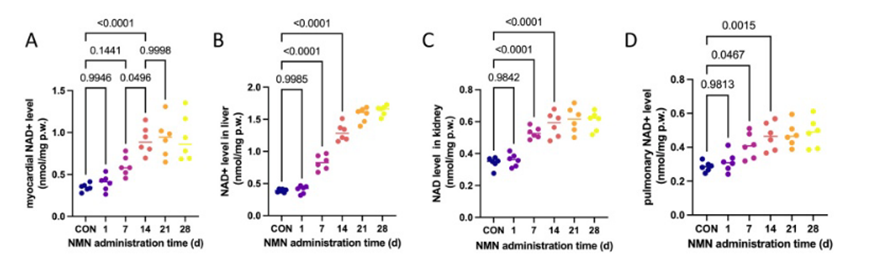
Figure 1: NMN supplementation significantly increases NAD⁺ levels in various tissues.
Supplement NMN Significantly ameliorates myocardial injury in mice with endotoxemia.
The research team established a mouse model of endotoxin‑induced myocardial injury. Experimental results showed that mice treated with lipopolysaccharide exhibited a significant reduction in survival, markedly elevated serum cardiac troponin levels, severe impairment of cardiac function, a substantial decrease in myocardial adenosine triphosphate (ATP) production, and a pronounced upregulation of inflammatory cytokine expression, along with increased markers of oxidative damage. Following 14 days of intraperitoneal administration of NMN, all of these myocardial‑injury‑related parameters were significantly ameliorated.
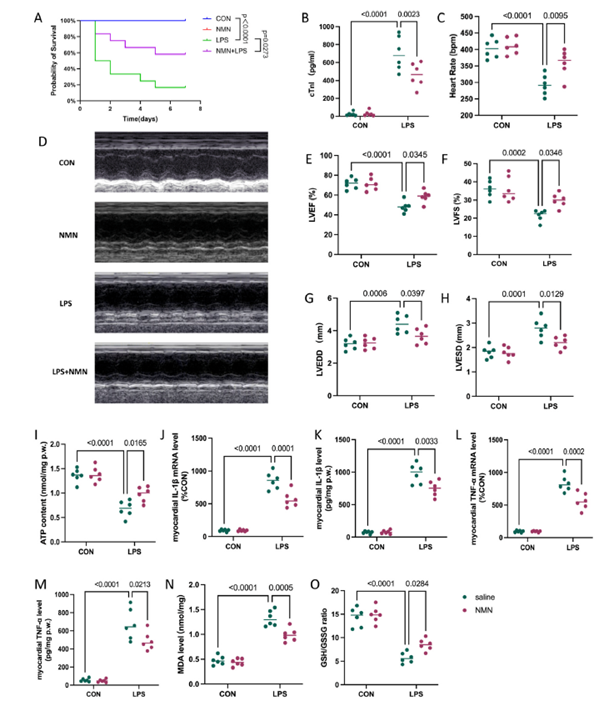
Figure 2: NMN supplementation significantly ameliorates myocardial injury in mice with endotoxemia.
Supplement NMN Can improve abnormal SDH Catalytic function
SDH is a key enzyme in the tricarboxylic acid cycle and oxidative phosphorylation, catalyzing the oxidation of succinate to fumarate; its functional impairment can lead to disturbances in myocardial energy metabolism. Studies have shown that LPS treatment induces dysregulation of SDH catalytic activity in mouse cardiac tissue, resulting in substantial accumulation of succinate and a reduction in fumarate levels. In contrast, NMN supplementation markedly restores the abnormal catalytic activity of SDH and re-establishes the normal metabolic balance between succinate and fumarate.
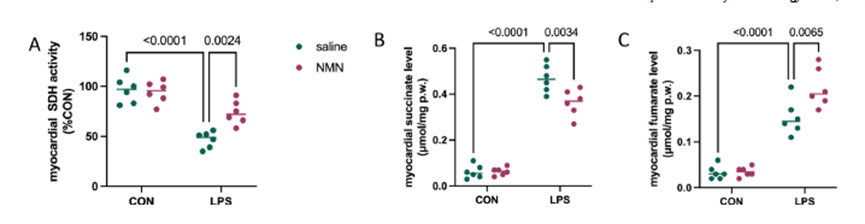
Figure 3: NMN supplementation can ameliorate abnormal SDH catalytic activity.
Supplement NMN Reduce SDH Succinylation and promotion of Sirt5 —SDH Combine
Previous studies have shown that NAD⁺ is both a substrate and a cofactor essential for the catalytic activity of the Sirtuin deacetylase family, while Sirtuins can regulate the protein activity of SDH through acetylation or succinylation modifications. In this study, researchers measured the levels of acetylation and succinylation of SDH in myocardial tissue from LPS‑treated mice and investigated the effects of NMN supplementation on these post‑translational modifications. The results demonstrated that, in LPS‑treated mice, the succinylation level of SDH was significantly elevated, whereas its acetylation level remained unchanged; NMN supplementation, however, markedly reduced SDH succinylation. Further analyses revealed that NMN did not alter the expression levels of Sirt5 or SDH but promoted the interaction between Sirt5 and SDH. Moreover, cardiac‑specific knockout of Sirt5 substantially attenuated the protective effects of NMN in mice, indicating that NMN mitigates endotoxin‑induced myocardial injury by modulating the Sirt5–SDH pathway.
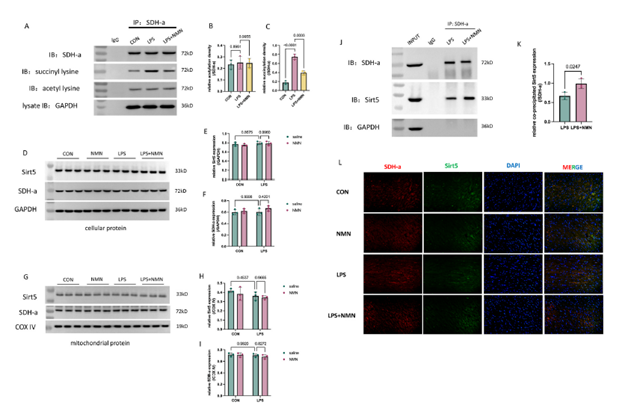
Figure 4: NMN supplementation reduces SDH succinylation and promotes the interaction between Sirt5 and SDH.
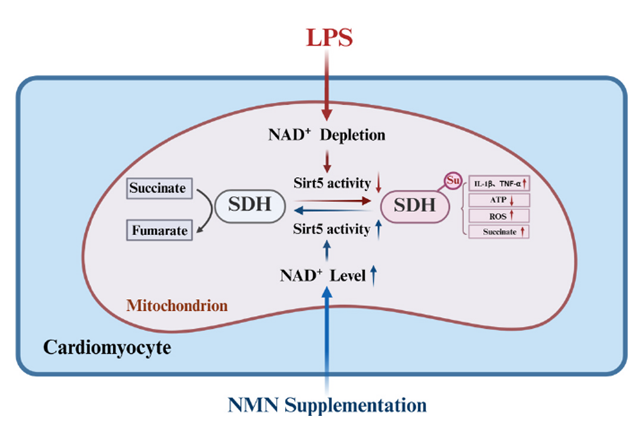
Figure 5: NMN alleviates [condition] by modulating the Sirt5-SDH pathway.
Schematic diagram of the mechanisms underlying myocardial injury induced by endotoxemia.
In summary, this study demonstrates that NMN supplementation elevates NAD⁺ levels in mouse cardiomyocytes and, by promoting Sirt5‑mediated de‑succinylation of SDH, ameliorates succinate metabolic dysregulation, thereby mitigating LPS‑induced myocardial injury.
References:
Tao H, Dong Q, Long Y, et al. β-Nicotinamide Mononucleotide protects against endotoxemia-induced myocardial injury through Sirt5-dependent desuccinylation of succinate dehydrogenase[J]. European Journal of Pharmacology, 2026, 1015: 178562. https://doi.org/10.1016/j.ejphar.2026.178562.
Leave a Message Online


Hotline: 021-68187180

Fax: 021-68187179

Email: services@syncozymes.com
Email:sales@syncozymes.com

Address: No. 1199, Landian Road, Zhoupu Town, Pudong New Area, Shanghai

 Shanghai Public Security Bureau Internet Information Service Security Filing No. 31011502015262
-
-