
Cutting-Edge Research Advances — Ageing Research Reviews publishes findings: A comparative study of the anti‑aging effects of PQQ versus NMN/NR — and an analysis of the feasibility of their combined use.
Classification: Industry News
Publication:2026-05-06 09:41
I. Introduction
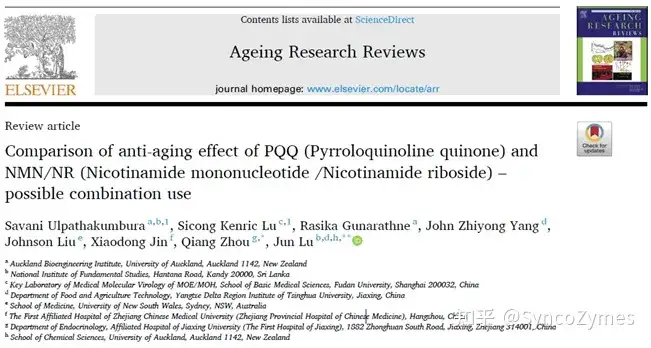
On December 11, 2025, a team led by Professors Savani Ulpathakumbura and Jun Lu at the Institute of Bioengineering, University of Auckland, published a review article titled “Comparison of anti-aging effect of PQQ (Pyrroloquinoline quinone) and NMN/NR (Nicotinamide mononucleotide/Nicotinamide riboside)–possible combination use” in Ageing Research Reviews.
As global population aging intensifies, anti‑aging interventions and the extension of healthspan have become central research priorities, with various bioactive compounds attracting considerable attention. Multiple studies have demonstrated that pyrroloquinoline quinone (PQQ) and nicotinamide mononucleotide/ribose (NMN/NR) exhibit pronounced anti‑aging effects; however, their mechanisms of action and relative efficacies have yet to be systematically compared. This review aims to comprehensively evaluate the anti‑aging efficacy, biological benefits, and potential synergistic interactions of PQQ versus NMN/NR, thereby providing valuable insights for the development of more effective anti‑aging therapies.
II. Understanding PQQ and NMN/NR
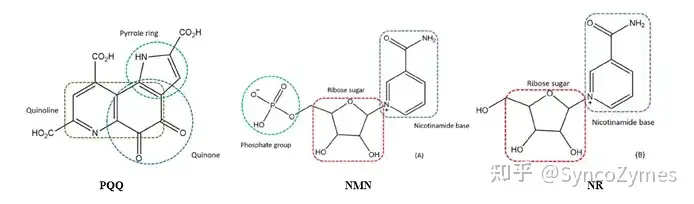
PQQ is a water-soluble, vitamin-like compound naturally found in fruits and vegetables such as kiwifruit and parsley, as well as in fermented soy products and human breast milk. As a multifunctional bioactive substance, its core roles include supporting mitochondrial health and regulating energy metabolism. It also possesses potent antioxidant properties, helping to mitigate oxidative stress while protecting the nervous system, repairing skin, and alleviating inflammation and liver fibrosis. PQQ thus plays a crucial role in human development, anti‑aging, and longevity.
NMN and NR are key precursors for the human body’s synthesis of NAD+ (nicotinamide adenine dinucleotide). NMN occurs naturally in foods such as broccoli and edamame, while NR is primarily derived from cow’s milk and is a derivative of vitamin B3. NAD+ is a central coenzyme that helps maintain cellular homeostasis; its levels decline with age. Supplementing with NMN or NR can elevate NAD+ levels via distinct metabolic pathways, repair DNA, improve metabolism, and thereby slow aging at its root.
III. Mechanisms of Anti-Aging Effects and Synergistic Effects of PQQ with NMN/NR
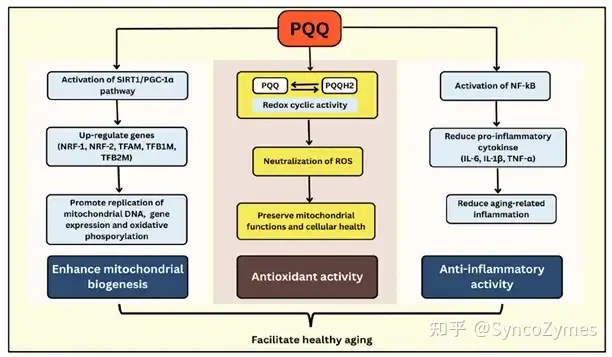
The anti‑aging effects of PQQ are primarily mediated through three key pathways: first, it activates the SIRT1/PGC‑1α signaling axis, promoting mitochondrial biogenesis and restoring age‑related declines in energy metabolism, while also increasing mitochondrial DNA content and enhancing respiratory enzyme activity to improve cellular vitality at its root; second, as a potent antioxidant, it neutralizes free radicals via redox cycling, reducing oxidative damage to cells and protecting cell membranes; third, it inhibits the NF‑κB pathway, lowering pro‑inflammatory cytokine levels, alleviating chronic inflammation, and delaying cellular senescence, while also helping to maintain metabolic homeostasis and prevent age‑related metabolic disorders.
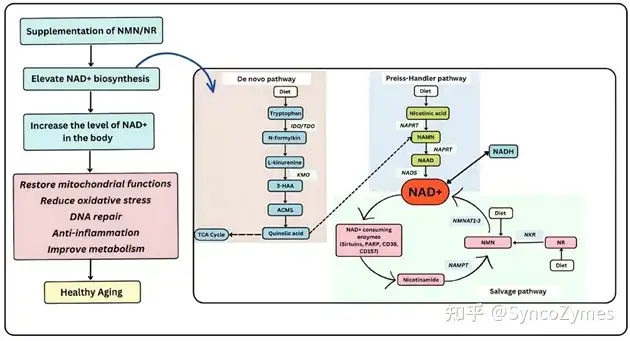
The anti‑aging mechanisms of NMN and NR are more direct: as key precursors of NAD+, they help replenish NAD+ levels that decline with age. In the human body, NAD+ is consumed by various enzymes, leading to mitochondrial dysfunction and heightened oxidative stress. Supplementing with NMN or NR efficiently boosts NAD+ synthesis via salvage pathways and other routes, activating critical proteins such as SIRT1, which in turn regulate gene expression, DNA repair, and inflammatory responses. This helps improve metabolic health and slow down aging. Notably, NMN can be directly converted into NAD+, whereas NR must first be converted into NMN before undergoing further biosynthesis.
The combined use of PQQ and NMN/NR produces a synergistic effect, as the two pathways are closely interconnected. PQQ activates the SIRT1 pathway in a manner that depends on adequate NAD+ levels, while NMN/NR‑derived NAD+ amplifies PQQ’s ability to promote mitochondrial biogenesis. Conversely, PQQ enhances mitochondrial function and stabilizes cellular redox homeostasis, thereby creating a more favorable intracellular milieu for NAD+-related metabolic processes. This bidirectional enhancement yields anti‑aging benefits that far surpass those achieved by either supplement alone.
IV. Systemic Mechanisms and Physiological Effects of PQQ and NMN/NR
4.1 Anti-inflammatory Activity
Chronic inflammation is a central driver of aging and age‑related diseases, and both PQQ and NMN/NR have demonstrated potential anti‑inflammatory effects—though most evidence comes from preclinical studies, and further human clinical trials are needed to confirm these findings. PQQ has been shown to reduce biomarkers of aging, suppress the production of pro‑inflammatory cytokines, and inhibit the activation of inflammatory signaling pathways, with promising results in models of arthritis, intestinal inflammation, and other conditions. As for NR, small‑scale human clinical trials have indicated that daily supplementation of 1 g for 21 days can lower circulating levels of inflammatory markers; however, given the limited sample size and duration of intervention, its long‑term efficacy remains to be fully established.
4.2. Neuroprotection / Brain Function / Cognitive Function
Neuroprotection and cognitive enhancement are key anti‑aging benefits of both compounds. PQQ, thanks to its ability to cross the blood–brain barrier, safeguards neuronal cells and mitigates cognitive decline; in animal studies, it has ameliorated symptoms in Alzheimer’s and Parkinson’s disease models. Small human trials have further demonstrated that PQQ supplementation can improve memory and cognitive flexibility across diverse age groups. Meanwhile, NMN/NR, by replenishing NAD+, preserves synaptic integrity, boosts neural stem cell activity, and reduces neuronal apoptosis, thereby helping to counteract age‑related cognitive decline and showing particularly promising results in models of neurodegenerative diseases.
4.3 Metabolic Regulation
As people age, the risk of metabolic disorders such as type 2 diabetes and obesity increases. PQQ improves insulin sensitivity and lipid profiles while reducing fat accumulation by promoting mitochondrial fatty acid metabolism and activating regulatory factors. In contrast, NMN and NR enhance NAD+ levels to activate relevant enzymes, thereby improving lipid metabolism and insulin resistance; however, high-dose supplementation may carry adverse effects, and their metabolic‑regulating benefits still require further clinical validation.
4.4 Cardiac Protection
Both PQQ and NMN/NR possess the potential to mitigate age‑related cardiovascular damage, though their mechanisms of action differ. PQQ exerts its effects through antioxidant properties, scavenging reactive oxygen species, alleviating oxidative stress, protecting cardiomyocytes, and reducing ischemic injury; it also helps attenuate damage caused by cardiac pressure overload. In contrast, NMN/NR replenishes NAD+ levels, activates relevant enzymes, enhances mitochondrial function, and confers cardiovascular protection by diminishing myocardial injury and vascular pathology. While both compounds demonstrate cardioprotective benefits, further large‑scale human clinical trials are needed to confirm their efficacy and ensure safety.
4.5 Skeletal Muscle Protection
Both PQQ and NMN/NR can protect skeletal muscle function during aging. As a potent antioxidant, PQQ mitigates oxidative stress, enhances mitochondrial function, reduces inflammation, inhibits muscle protein breakdown, preserves muscle mass, and improves myofiber morphology; it also alleviates muscle atrophy induced by nerve damage. Meanwhile, NMN/NR supports muscle health by replenishing NAD+ levels, preserving myogenic stem cell activity, and improving mitochondrial function in muscle tissue. Both compounds center on mitochondrial function and anti‑inflammation, with PQQ emphasizing direct antioxidant and anti‑inflammatory effects, and NMN/NR focusing on the regulation of energy metabolism.
4.6 Bone Health/Osteoporosis Prevention
Both PQQ and NMN/NR exert protective effects against age‑related osteoporosis, though their mechanisms differ. PQQ mitigates oxidative stress, suppresses senescence in bone cells, and enhances osteoblast activity, thereby reducing bone loss and improving bone strength and density; it also ameliorates osteoporosis induced by hormonal imbalance, with efficacy comparable to estrogen supplementation, primarily via the Nrf2‑ARE antioxidant pathway. NMN promotes osteogenic differentiation, improves mitochondrial function in bone cells, and accelerates fracture healing, while NR delays bone damage by alleviating oxidative stress and inflammation. Both compounds have demonstrated promising preclinical results, yet human clinical trials remain scarce, and their absorption and utilization in bone tissue are still unclear, underscoring the need for further clinical studies to confirm these findings.
4.7 Skin Health
Both PQQ and NMN/NR can protect the skin and delay skin aging. PQQ can reverse premature skin aging, improve skin structure, and promote cellular growth; it also shields the skin from UV‑induced damage, strengthens the skin barrier and enhances hydration, and reduces inflammation. Meanwhile, NMN/NR boosts NAD+ levels, inhibits melanin production, mitigates UV‑induced damage, preserves skin architecture and collagen, diminishes hyperpigmentation and cutaneous inflammation, and may even lower the risk of skin cancer. Although these compounds support skin health through distinct mechanisms, most studies to date remain preclinical, and the extent of dermal absorption and the effective concentrations required still need further validation.
4.8 Renal Protection
Both PQQ and NMN/NR exhibit potential renal protective effects, alleviating age‑related kidney damage, though their mechanisms differ. PQQ activates the Keap1/Nrf2 pathway, thereby reducing reactive oxygen species, inflammation, and cellular senescence; short‑term supplementation also lowers levels of inflammatory biomarkers and uremic toxins. In contrast, NMN/NR boosts NAD+ levels, activating relevant enzymes to improve renal tissue integrity, mitigate tubular injury, and inhibit renal fibrosis.
4.9 Reproductive Health Protection
As people age, the functions of the human reproductive system gradually decline. PQQ and NMN/NR have significant effects in improving reproductive health and delaying reproductive aging. PQQ can regulate hormonal balance, reduce ovarian fibrosis, and enhance the quality of both sperm and oocytes; meanwhile, NMN/NR protect germ cells and improve mitochondrial function by replenishing NAD+.
4.10 Liver Protection
Both PQQ and NMN/NR exert hepatoprotective effects. Specifically, PQQ mitigates hepatic oxidative damage and protects hepatocytes by enhancing bilirubin metabolism in the gallbladder and reducing oxidative stress; meanwhile, NMN/NR supplements NAD+ to modulate hepatic metabolism and improve liver function. Studies have shown that PQQ can help alleviate liver injury, while NMN may ameliorate age‑related metabolic dysregulation in the liver.
V. Synergistic Enhancement: Advantages of Combined Application
At present, specialized research on the synergistic anti‑aging effects of PQQ and NMN/NR remains relatively limited. However, combination formulations that pair these two compounds have already been granted multiple patents and are being used in dietary supplements, skincare products, and cosmetics. From a mechanistic perspective, the two ingredients exhibit natural complementarity: PQQ focuses on mitochondrial protection while delivering potent antioxidant and anti‑inflammatory benefits; NMN/NR primarily boosts intracellular NAD+ levels and activates age‑defying metabolic pathways. Together, they create a complementary synergy that amplifies overall anti‑aging efficacy. That said, most current combination formulas incorporate a variety of active ingredients, and the additive effects of PQQ with NMN/NR are largely based on theoretical modeling, lacking robust clinical trial data and biochemical evidence. The real‑world effectiveness of such combinations therefore requires further investigation and validation.
From a safety perspective, standardized long-term dosing guidelines for various anti‑aging ingredients have yet to be established. PQQ, for instance, has received GRAS status from the U.S. FDA, underpinned by a robust safety profile: human supplementation at 21.5 mg per day is well tolerated, and in animal studies, rats have shown tolerance up to 400 mg/kg per day. Nevertheless, PQQ still faces challenges, including insufficient formulation standardization, relatively low bioavailability, and a lack of long‑term safety data. NMN exhibits good short‑term tolerability, with a generally accepted daily range of 100–1,250 mg; at doses as high as 2,000 mg per day, some individuals may experience mild gastrointestinal discomfort. NR, meanwhile, benefits from the most comprehensive safety research, with overall good tolerability at 3,000 mg per day, though occasional mild adverse effects such as nausea or skin flushing have been reported. Overall, the short‑term safety of single‑ingredient use remains manageable; however, safety data on the long‑term combined intake of PQQ with NMN or NR remain limited, underscoring the need for further research before routine co‑use or higher supplemental doses are recommended.
References: Savani Ulpathakumbura, Sicong Kenric Lu, Rasika Gunarathne, et al. Comparison of anti-aging effect of PQQ (Pyrroloquinoline quinone) and NMN/NR (Nicotinamide mononucleotide /Nicotinamide riboside) – possible combination use [J]. Ageing Research Reviews. 2026, 114, 102992. DOI:10.1016/j.arr.2025.102992.
Leave a Message Online


Hotline: 021-68187180

Fax: 021-68187179

Email: services@syncozymes.com
Email:sales@syncozymes.com

Address: No. 1199, Landian Road, Zhoupu Town, Pudong New Area, Shanghai

 Shanghai Public Security Bureau Internet Information Service Security Filing No. 31011502015262
-
-