
Biocatalysis Series — Epoxide Hydrolases
Classification: Industry News
Publication:2026-05-06 09:55
I. Introduction to Epoxide Hydrolases
Epoxide hydrolases (EH), also known as epoxide hydratases or epoxide hydrolyases, are a class of enzymes capable of catalyzing the hydrolysis of racemic epoxides. The hydrolytic reactions they mediate can be categorized into kinetic resolution and enantioselective hydrolysis, with reaction schemes illustrated in Figure 1A and Figure 1B, respectively.
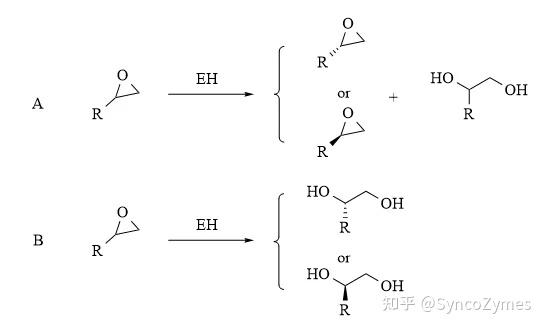
Epoxide hydrolases are a class of cofactor‑independent biocatalysts that are widely distributed in nature. [1] EHs can be classified, based on differences in their structure and enzymatic reaction mechanisms, into α/β‑fold hydrolases, leukotriene A4 epoxidase, and limonene 1,2‑epoxide synthase. [2-3] 。
Most EHs belong to the classical α/β-hydrolase fold family. Their secondary structure typically comprises an α/β‑fold main domain and a cap domain. The α/β‑fold main domain consists of five α‑helices and eight β‑strands and harbors the catalytic triad—Asp–His–an acidic residue (Glu or Asp)—at the active site. The cap domain, located above, is composed of five α‑helices and contains two conserved tyrosine residues. The cap domain is linked to the α/β‑fold domain via the NC‑loop (as shown in Figure 2). [2] [4] 。
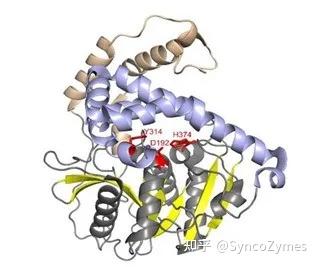 Figure 2. Structure of the Aspergillus niger epoxide hydrolase (PDB: 1Q07) [4]
Epoxide hydrolases offer several advantages: they are widely available, amenable to large-scale production, exhibit high catalytic efficiency and strong stereoselectivity, and their catalytic reactions do not require cofactor participation. [5] Its hydrolysis products, chiral epoxides and ortho‑diols, are important structural motifs in the synthesis of pharmaceuticals and fine chemicals. Examples of applications are as follows:
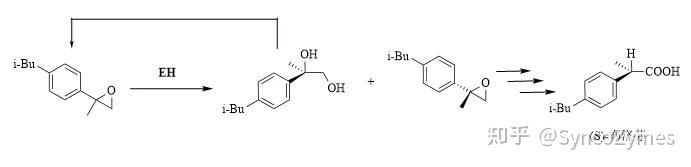
Example 1: Preparation of the (S)-ibuprofen chiral intermediate [6]
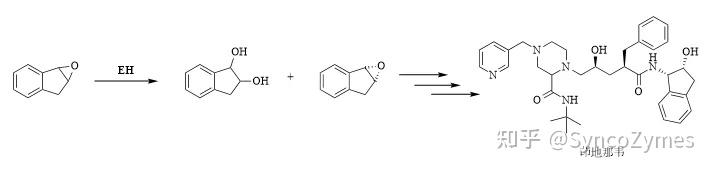
Example 2: Preparation of an indinavir intermediate [ 7]
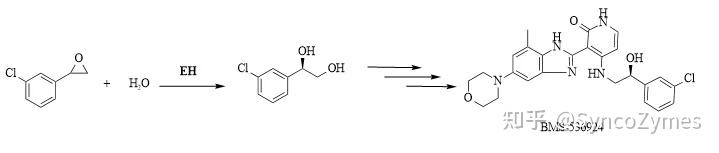
Example 3: Preparation of the BMS-536924 Intermediate for an IGF‑1R Kinase Inhibitor [8]
II. Catalytic Mechanism of Epoxide Hydrolase Reactions
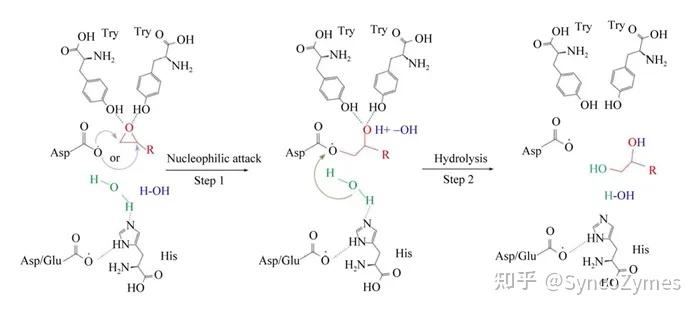
At present, the mechanistic study of the α/β‑fold–type EH‑catalyzed hydrolysis reaction is relatively well established. [5] The α/β‑fold EH catalyzes the hydrolysis of epoxides in two steps (as shown in Figure 3). In the first step, two conserved tyrosine residues form hydrogen bonds with the oxygen atom of the substrate epoxide ring, stabilizing the binding between the substrate and the enzyme. A single aspartate residue then carries out a selective nucleophilic attack on the α‑ or β‑carbon of the epoxide ring, opening the ring and generating an intermediate. In the second step, a water molecule activated by histidine and aspartate reacts with this intermediate, yielding the product, the vicinal diol. [3] 。
III. Shangke Bio’s Epoxide Hydrolase Enzyme Library and Enzyme Development Services
Since 2007, Shangke Bio has been dedicated to the research and development of bioenzymes, biocatalytic technologies, and synthetic biology techniques. Its existing epoxide hydrolase enzyme library (code-named ES‑EH) comprises three epoxide hydrolases from distinct sources, enabling the company to offer customers enzyme screening, optimization of enzymatic reaction processes, enzyme engineering, and production‑supply services.
References
[1] Xu Junxia, Jia Xiaoying, Wang Qianting, et al. Enzymatic characterization and applications of the RpEHL360C mutant of marine red yeast epoxide hydrolase [J]. Chinese Journal of Biotechnology, 2025, 45(04): 35–44.
[2] Liu Binghuan. Screening of Limonene Epoxide Hydrolase Mutants and Analysis of Their Enzymatic Properties [D]. Hunan Agricultural University, 2020.
[3] Zhu Meinan, Gu Xiao, Liu Dekai, et al. Discovery of a Novel Epoxide Hydrolase and Elucidation of Its Catalytic Mechanism [J]. Acta Microbiologica Sinica, 2025, 65(01): 389-401.
[4] Qiu, M.; Dong, S.; Cui, Q.; Feng, Y.; Xuan, J. Recent Progress in the Mechanism and Engineering of α/β Hydrolases for Chiral Chemical Production[J]. Catalysts 2023, 13, 288.
[5] Cao Fei, Li Yongquan, Mao Xuming. Advances in the catalytic mechanism and applications of microbial epoxide hydrolases [J]. Synthetic Biology, 2020, 1(05): 528–539.
[6]M. CleijA., Archelas, R. Furstoss. Microbiological Transformations 43. Epoxide Hydrolases as Tools for the Synthesis of Enantiopure α-Methylstyrene Oxides: A New and Efficient Synthesis of (S)-Ibuprofen[J]. J. Org. Chem. 1999, 64, 14, 5029-5035.
[7] Zhang J, Reddy J, Roberge C, et al. Chiral bio-resolution of racemic indeneoxide by fungal epoxide hydrolases[J]. Journal of Fermentation and Bioengineering, 1995, 80(3): 244-246.
[8] Xin Jia, Zunsheng Wang, Zhi Li. Preparation of (S)-2-, 3-, and 4-chlorostyrene oxides with the epoxide hydrolase from Sphingomonas sp. HXN-200[J].Tetrahedron: Asymmetry 19 (2008) 407-415.
Leave a Message Online


Hotline: 021-68187180

Fax: 021-68187179

Email: services@syncozymes.com
Email:sales@syncozymes.com

Address: No. 1199, Landian Road, Zhoupu Town, Pudong New Area, Shanghai

 Shanghai Public Security Bureau Internet Information Service Security Filing No. 31011502015262
-
-