
ACS Catal: Directed Evolution of a Meso‑Diaminopimelic Acid Dehydrogenase for the Synthesis of Macromolecular D‑Amino Acids
Classification: Industry News
Publication:2024-11-19 10:03
D‑amino acids are crucial chiral building blocks of numerous bioactive molecules and are widely employed in the pharmaceutical, cosmetic, food, and agrochemical industries. At present, a variety of biocatalytic approaches have been developed for the synthesis of D‑amino acids; among these, the reductive amination of α‑keto acids catalyzed by D‑amino acid dehydrogenases offers high atom economy and theoretical yields. However, naturally occurring D‑amino acid dehydrogenases are exceedingly rare and predominantly exist as membrane proteins, posing significant challenges to large-scale industrial production.
meso-Diaminopimelate dehydrogenase (meso-DAPDH) is a D‑amino acid dehydrogenase that catalyzes the reductive amination of α‑keto acids, with the specific reaction pathway illustrated in Figure 1.
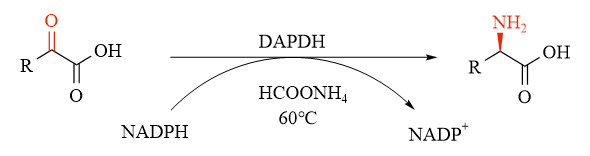
Figure 1. Meso-DAPDH-catalyzed reductive amination of α-keto acids.
This study employs type II meso-diaminopimelate dehydrogenase (BtDAPDH) from Bacillus thermoproteolyticus as a model and, through a stepwise, inside-out directed evolution approach, enhances the enzyme’s catalytic activity for the asymmetric synthesis of D‑amino acids from α‑keto acids.
The specific research process is as follows:
(1) Study on the Hierarchical Modification and Kinetic Properties of BtDAPDH
The substrate and the cofactor NADPH were docked into the active site of BtDAPDH. Based on the distance between the carbonyl carbon of the substrate benzoylformic acid and the Cα atoms of the amino acids in the substrate‑binding pocket, BtDAPDH was divided into three layers. The amino acid residues selected for mutagenesis—43 residues in total—are shown in Figure 2.
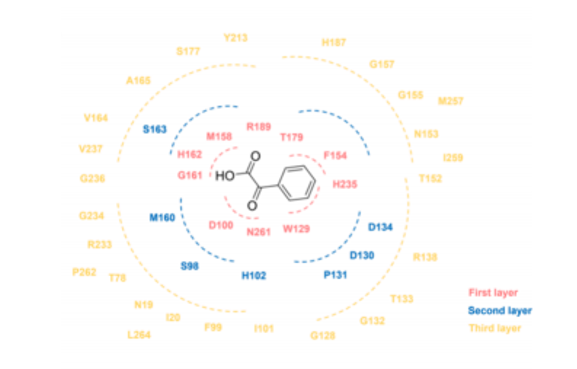
Figure 2. Amino acids of selected mutations in different layers of BtDAPDH
The residues selected at the first and second layers were individually replaced with each of the remaining 19 amino acids, and the resulting single‑point mutants were further combined to generate a superior variant, M4 (W129T/D134C/F154V/H235I). Building on M4 as the starting template, saturation mutagenesis was then performed at 26 candidate sites in the third layer; screening identified the optimal mutant, M5 (W129T/D134C/F154V/S177A/H235I). M5 exhibited a catalytic activity 275‑fold higher than that of the wild‑type enzyme (as shown in Figure 3), achieving a conversion rate of up to 86% with a 100 mM substrate. Moreover, M5’s kinetic parameter kcat/Km was 125‑fold that of the wild‑type enzyme, and its thermal stability was also improved.
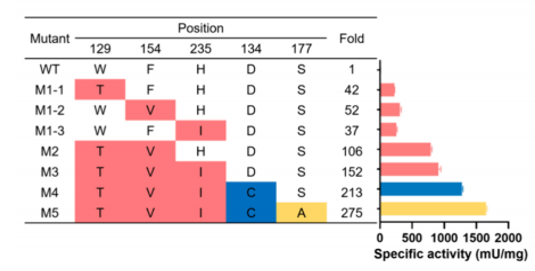
Figure 3. BtDAPDH mutant compared to the wild type
Mutation sites and relative activity of (WT)
(2) Substrate Spectrum Analysis of BtDAPDH Wild-Type Enzyme (WT) and Its Mutant M5
This study investigates the substrate scope of the wild-type BtDAPDH enzyme and its optimal mutant, M5 (as shown in Figure 4). The results demonstrate that mutant M5 exhibits excellent catalytic activity and stereoselectivity toward both aromatic and aliphatic α-keto acids, with enantiomeric excesses (ee) consistently reaching 99%.
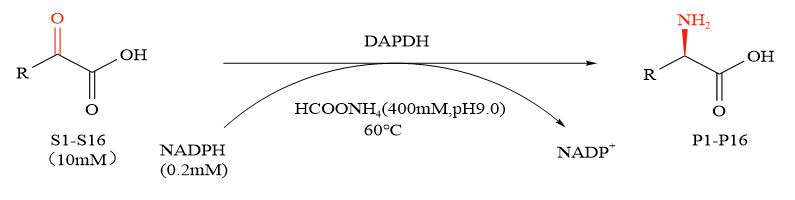
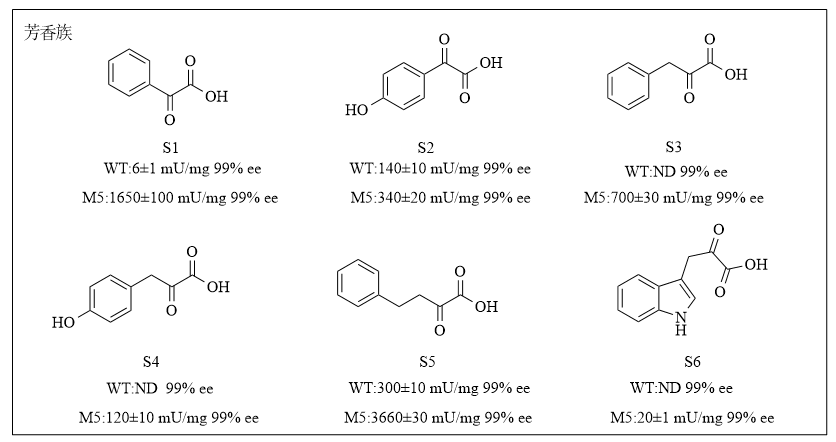
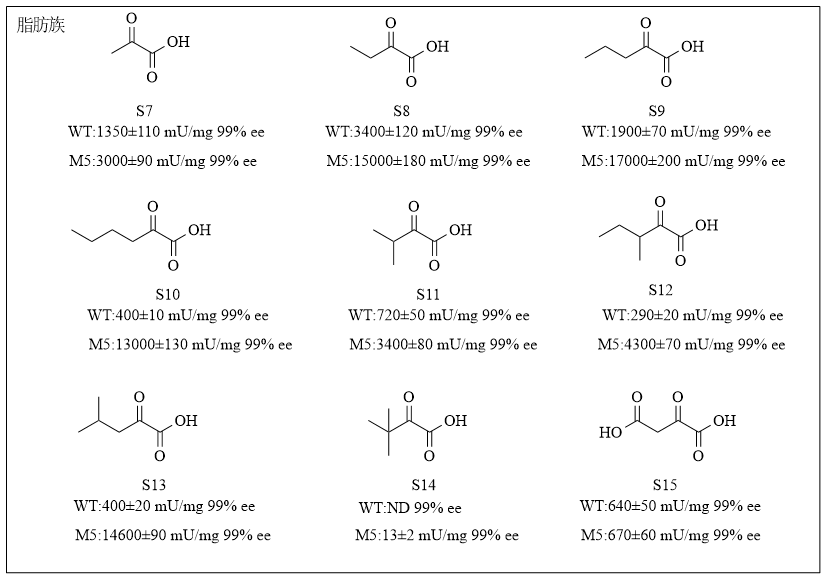
Figure 4. Substrate spectrum of the BtDAPDH wild-type enzyme (WT) and its M5 mutant.
(3) Investigation into the Mechanism Underlying Performance Changes in Mutant M5
To elucidate the mechanism underlying the enhanced catalytic activity and stability of the M5 mutant, the substrate benzoylformic acid was docked into the crystal structures of M5–NADPH and WT–NADPH (as shown in Figure 5), followed by molecular dynamics (MD) simulations. The results revealed that, compared with the wild type, the M5 mutant exhibits shorter distances during imine intermediate formation (d2: 4.7 Å vs. 10.0 Å) and more favorable nucleophilic attack (d1: 3.9 Å vs. 8.9 Å), both of which contribute to improved catalytic efficiency.
In the mutant M5, the F154V and H235I mutations bring nonpolar amino acid side chains into close proximity, forming a hydrophobic core that facilitates substrate binding. Additionally, H162 can engage in π–π stacking interactions with the substrate, thereby promoting the formation of an imine intermediate. These conformational adjustments help maintain the stability of the catalytic pocket and prevent structural clashes.
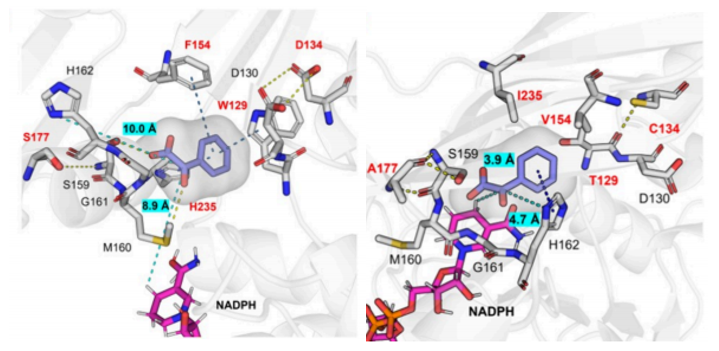
Figure 5. Crystal structures of the substrate benzoylformic acid complexed with WT and NADPH (left) and with M5 and NADPH (right).
(4) Optimization of reaction conditions for mutant M5
In this study, the authors used benzoylformic acid as the substrate and optimized reaction parameters such as temperature, pH, amine concentration, and NADP+ concentration. Since the coupling of formate dehydrogenase (BstFDH) with DAPDH can facilitate the regeneration of the NADPH cofactor during the reaction, it was also investigated. Accordingly, the molar ratio of M5 to BstFDH was similarly optimized.
In a 5 mL reaction system, using a fed-batch strategy, the optimal reaction conditions were: temperature 30°C, pH 10, 1 M formamidine, 0.2 mM NADP+, and an M5 to BstFDH ratio of 1:12. After 24 hours, the conversion rate reached as high as 99.5%.
(5) Applications of Mutant M5
In this study, the optimized BtDAPDH mutant M5 was applied to the synthesis of L‑phenylglycine, phenylalanine, and D‑phenylbutyric acid in gram-scale reactions, achieving yields exceeding 80% and enantiomeric excesses (ee) greater than 99% for all substrates (as shown in Figure 6).
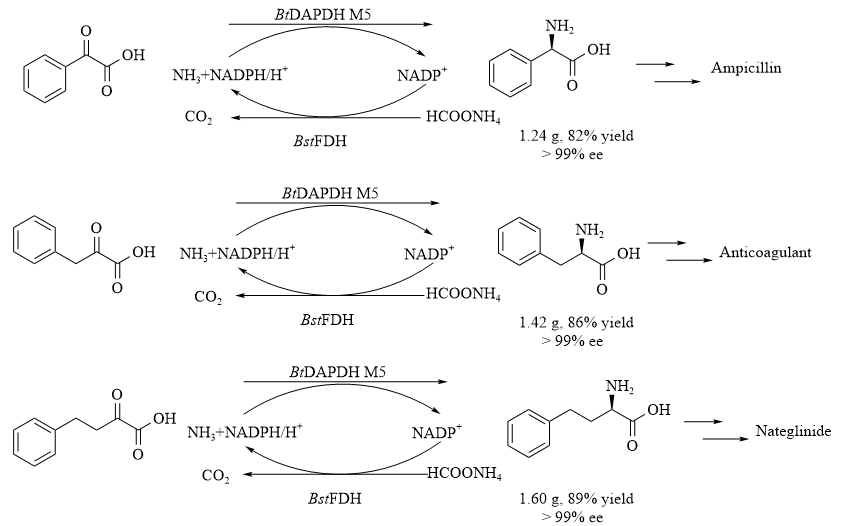
Figure 6. Application cases of the BtDAPDH mutant M
Summary: In this study, we engineered the enzyme through a tiered approach to expand its substrate‑binding pocket, ultimately identifying the optimal mutant, BtDAPDH‑M5, which exhibits high catalytic activity. M5 also demonstrates excellent thermal stability and stereoselectivity, enabling efficient asymmetric reductive amination of bulky aliphatic and aromatic α‑keto acids.
Source of the article: https://pubs.acs.org/doi/10.1021/acscatal.4c03164?fig=tgr1&ref=pdf.
Leave a Message Online


Hotline: 021-68187180

Fax: 021-68187179

Email: services@syncozymes.com
Email:sales@syncozymes.com

Address: No. 1199, Landian Road, Zhoupu Town, Pudong New Area, Shanghai

 Shanghai Public Security Bureau Internet Information Service Security Filing No. 31011502015262
-
-